
Is your thought faster than your typing?
Dictate a line in the editor: recognized speech becomes text. Review the result and keep working on your poem.

Write or dictate lines and examine phonetics and rhythm as you work. Save versions, record your own reading and find people you want to talk poetry with.
Watch the text and its technical analysis change as the author types. The recording shows two versions of one poem.
I write a line, The night is bright, The stars all shine, It feels all right.
The quiet streets release the light, A window holds the fading night, Each word I choose must find its place, And leave a little breathing space.
Russian, English, Ukrainian and Belarusian. Choose the analysis language for each poem.
Stress patterns, word forms and pronunciation variants support analysis and rhyme suggestions. Synonym dictionaries are additional.
Technical analysis helps you examine the structure. Artistic decisions remain yours.The five dictionary sources contain 4,804,742 entries. Word forms and pronunciation variants are counted; sources may overlap. This is not a count of unique words. Synonyms and the derived rhyme index are excluded.
| Language | Source entries |
|---|---|
| Russian | 415 722 |
| English | 254 681 |
| Ukrainian | 2 849 771 |
| Belarusian | 1 284 568 |
Phonetic analysis shows vowels and stresses on the cardiogram, while the second chart reveals the consonant pattern. Compare lines, notice repeated sounds and clusters of consonants, and check whether the sound supports your thought.
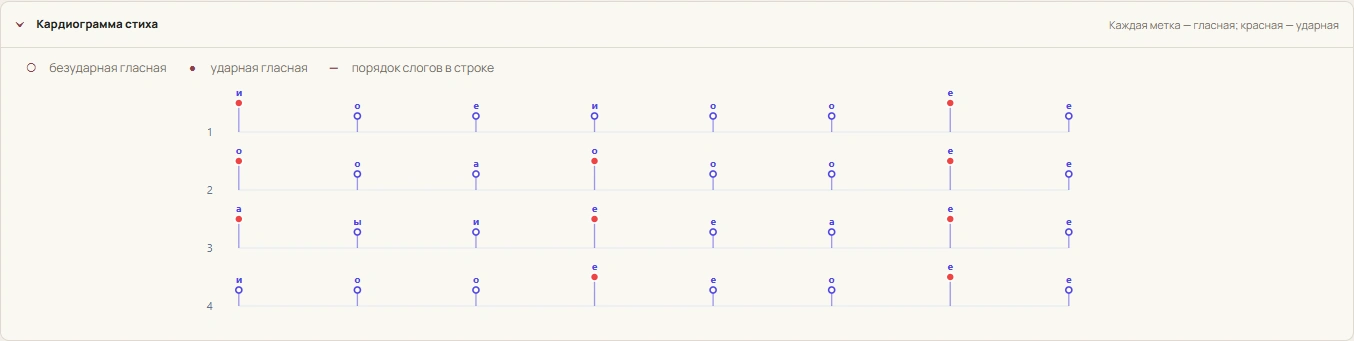
The screen could not load. Retry or open the editor itself.
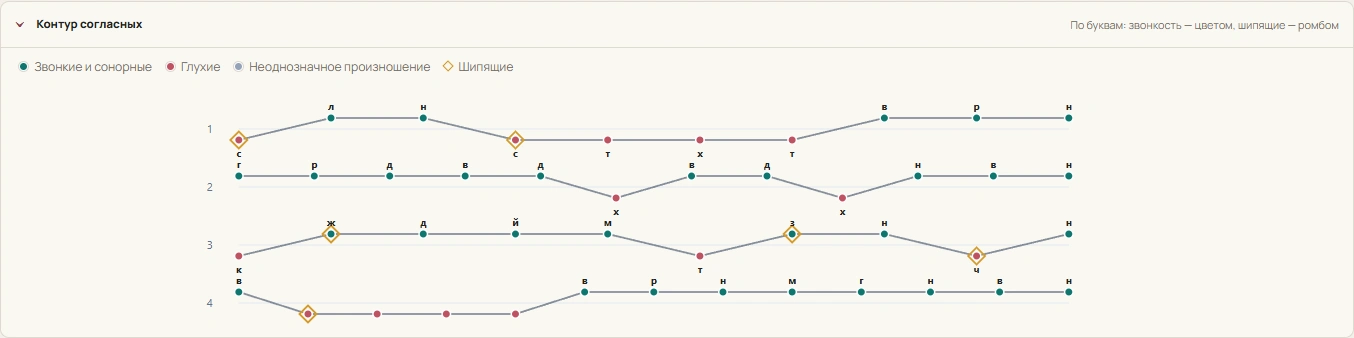
The screen could not load. Retry or open the editor itself.
Place the caret in a line and press Ctrl+Space: rhyme suggestions open directly in the editor. Adjust the syllable count, choose a word and keep your thought moving.
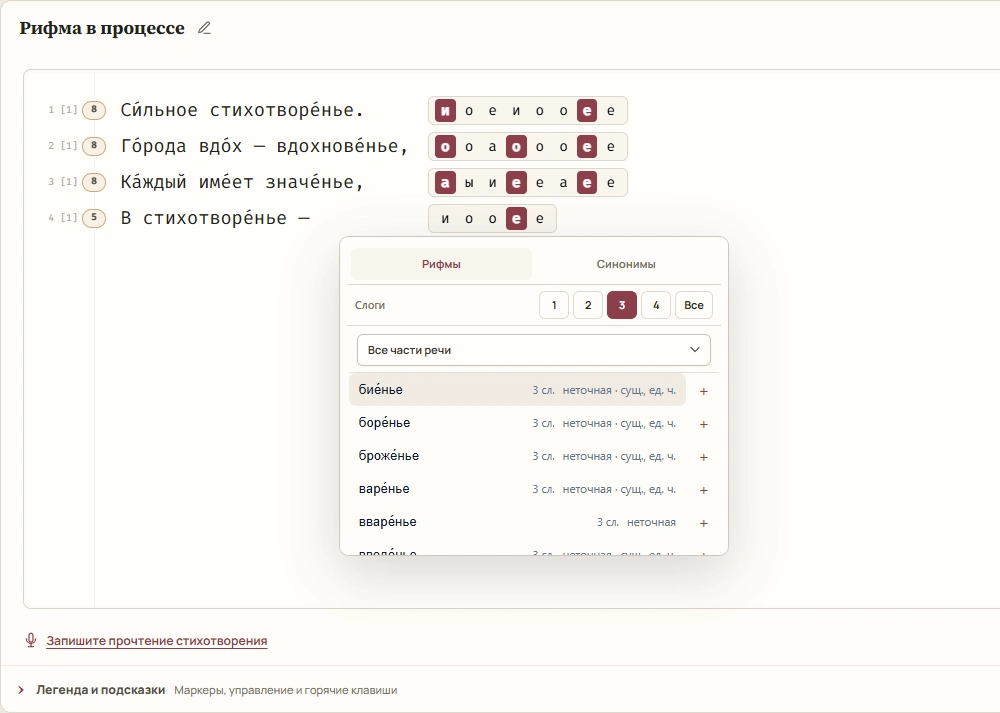
The screen could not load. Retry or open the editor itself.
Dictate a line in the editor: recognized speech becomes text. Review the result and keep working on your poem.
Record your own reading directly in the editor. Alongside the published poem, readers can hear your voice, pauses and intonation.
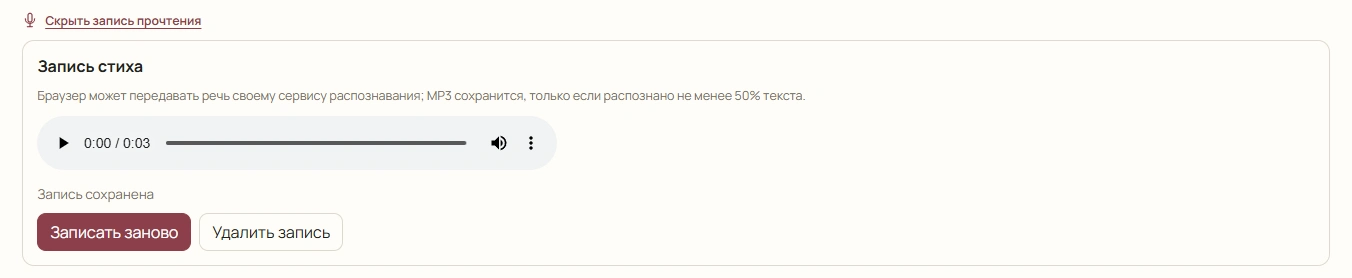
The screen could not load. Retry or open the editor itself.
Just write: by default, your poem saves automatically every few seconds. There is no need to press Save.
To keep the story of your work, capture separate versions: the first idea, a revision, the next draft. Compare them and restore the one you need. Share what is ready; leave the rest in your workshop.
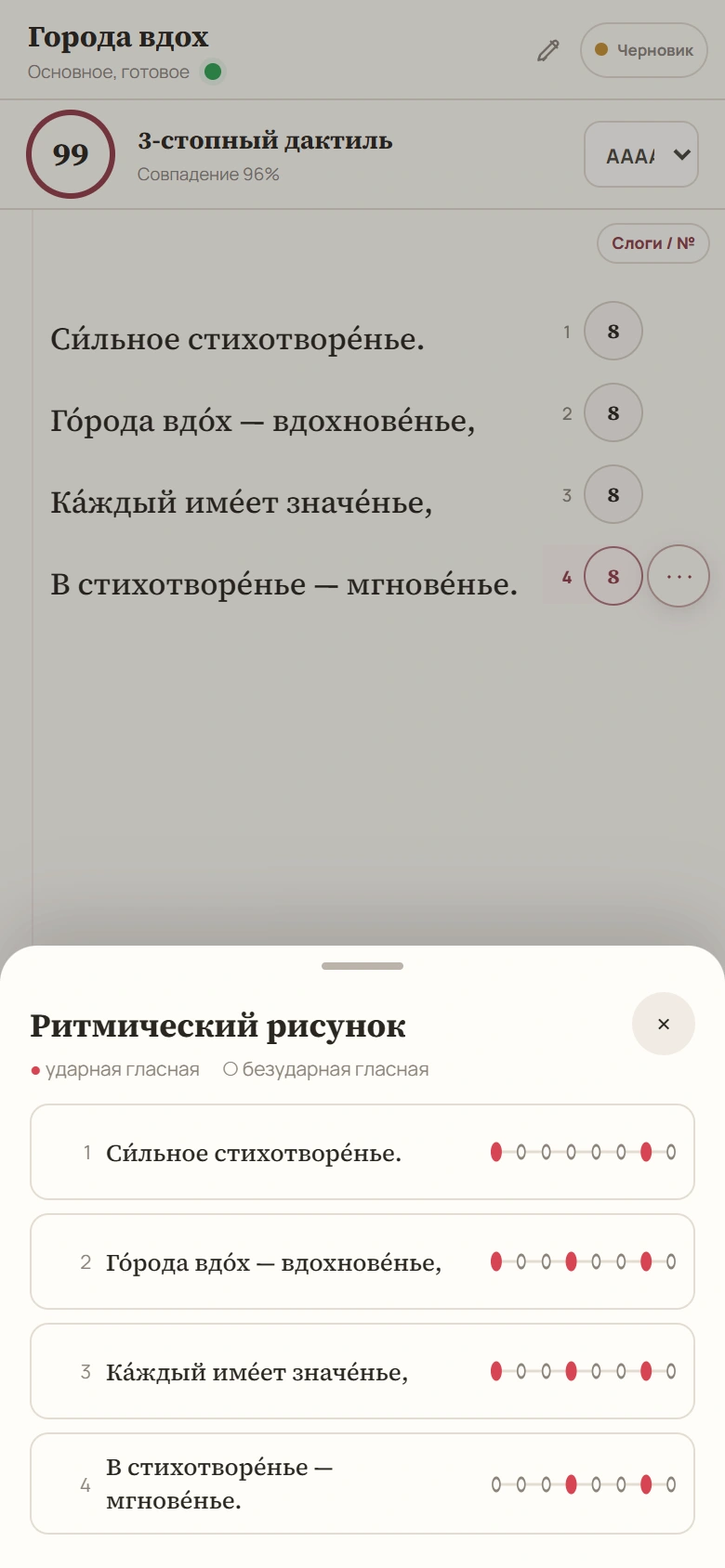
Start your poem →Continue your poem on your phone. Stress and syllables stay in view; open the rhythm pattern alongside the text.
Open the mobile editor →Actual PoetFactory screens, using text and results from the editor.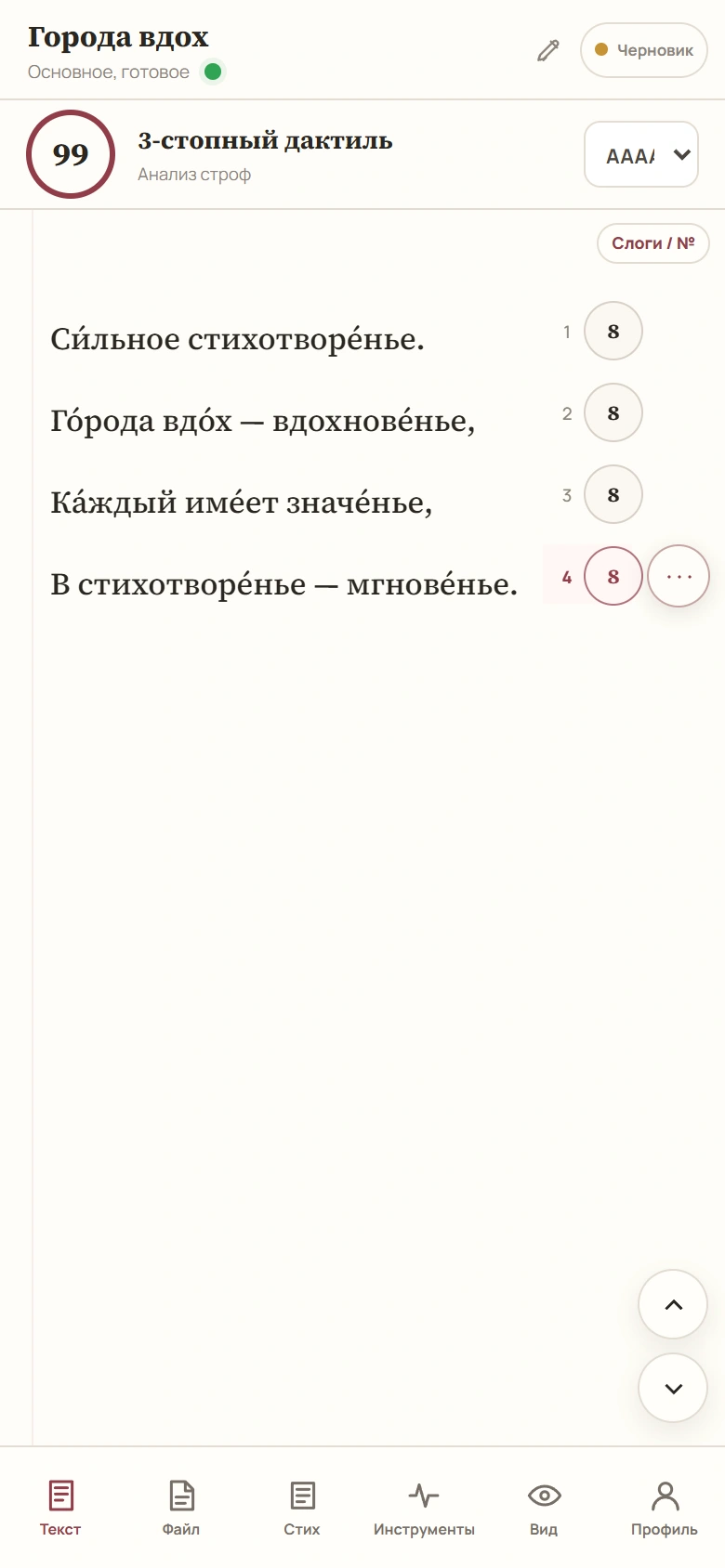
The screen could not load. Retry or open the editor itself.
The screen could not load. Retry or open the editor itself.
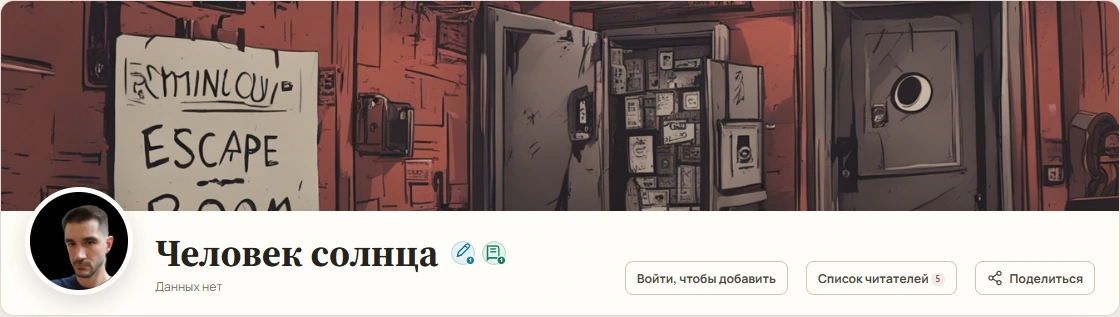
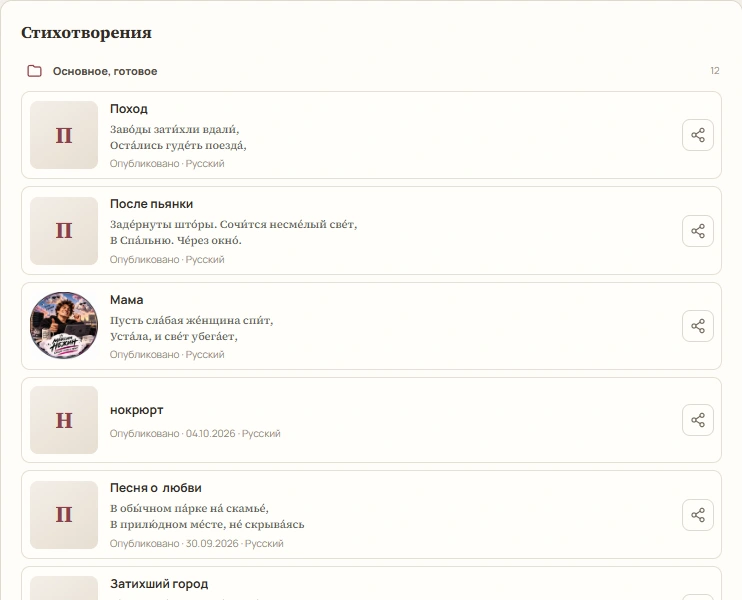
Bring your published poems together on your author page. Readers can explore your collections, get to know you and follow one line to more of your work.
The screen could not load. Retry or open the editor itself.
The screen could not load. Retry or open the editor itself.
Your author page brings your published poems together. Readers can share the page and explore the community around your work.
Explore an author page →Create your own page →Read, examine the poem’s structure and explore the author’s versions. Explain your response in a review and compare it with other readers’ views.
Loading publications…
Collections by PoetFactory authors. Submit a poem to an open issue or read published editions.
All anthologies →Write your own. Or find one that speaks to you.
Your poems start a conversation.
Share a poem or your author page, add other poets as friends and meet in reviews. Your work gains a circle of people to talk with.
Invite your reader.
Share the link to a poem or author page with people whose opinions matter to you.
Find poets on your wavelength.
Meet people on author pages, send friend requests and build your literary circle.
Talk about the poem itself.
Write reviews, explain your ratings and reply to one another in discussions. The author chooses whether reviews and replies are allowed.